Showing posts with label Strategy. Show all posts

Saturday, August 1

Mobile Advertising – 2020 vision: The rise of the individual

Great paper on Mobile Advertising in 2020 by Acision and OgilvOne.

You can look at the slideshare or download it here
More from Andrew Gill

Here are some highlights:

Mobile advertising in 2020 will be mobile directed advertising. It is about collaboration and individual control. The mobile device will enable the individuals to decide where, when and on what screen they would like to receive their chosen advertisement. Advertising will move away from creating campaigns which are forced upon particular consumer categories and instead will transform to engage in constant conversations, where both parties participate.
1. The advertising agency will transform from one which is industry led, namely by the brands, to one where the individual is brought more into the communication process.
2. The consumers will evolve from those having advertisements pushed to them, to being able to select what information is allowed to reach them.
3. Different types of mobile operator will be formed. Operators will no longer be the linking pin we know now who are able to provide all the infrastructure, services and want to control the end user experience, competing with each other. There will be operators who decide to specialize purely in the infrastructure and will provide this capability to those who have decided to focus solely on the services.

Tuesday, July 7

A Culture of Sharing: the HCD Toolkit by IDEO

IDEO partnered with International Development Enterprises (IDE), Heifer International, ICRW, and the Bill & Melinda Gates Foundation to create a toolkit for applying Human-Centered Design to inspire new solutions to difficult challenges within communities of need.

The Toolkit is divided into four sections:

The Introduction will give an overview of HCD and help you understand how it might be used alongside other methods.
Download the Intro Guide.pdf

The Hear guide will help your design team prepare for fieldwork and understand how to collect stories that will serve as insight and inspiration. Designing meaningful and innovative solutions that serve your customers begins with gaining deep empathy for their needs, hopes and aspirations for the future. The Hear booklet will equip the team with methodologies and tips for engaging people in their own contexts to delve beneath the surface.
Download the Hear Guide

The Field Guide and Aspirations cards are a complement to the Hear guide; these are the tools your team will take with them in order to conduct research.
Download the Field Guide
Download the Aspirations Cards

The Create guide will help your team work together in a workshop format to translate what you heard from people into frameworks, opportunities, solutions, and prototypes. During this phase, you will move from concrete to more abstract thinking in identifying themes and opportunities and back to the concrete with solutions and prototypes.
Download the Create Guide

The Deliver guide will help catapult the top ideas you have created toward implementation. The realization of solution includes rapid revenue and cost modeling, capability assessment, and implementation panning. The activities offered in this phase are meant to complement your organization's existing implementation processes and may prompt adaptations to the way solutions are typically rolled out.
Download the Deliver Guide

Also check the article by Alissa Walker (Fast Company)

Thursday, May 21

Find a job via Twitter

Let's call it embracing new technology. FashionIndie.com is looking for a new Style Editor and they don't want to go through the hassle of using Craigslist to find them. So they are only accepting resumes through Twitter. 

In order to apply, submit your best personal style pic with 
@fashionindie in your tweet. They'll feature the best photos on FashionIndie.com and contact you if you are selected for the job. If hired, you'd be responsible for dressing awesome and taking photos of yourself for FashionIndie.com. 

Here's the official Twitter Release. 

We're searching for a Style Editor. Resume = Ur Best Style Pic. Twit your style pics @fashionindie to be considered. Best will be featured.

For more on FashionIndie.com, be sure to visit 
FashionIndie.com.

Saturday, April 25

See it Now, Buy it Now

A new trend in fashion is set to hit the catwalks of New York in September 2009, when the newly formed New York Fashion Week Organisation (NYFW), a non-profit charity that benefits children in need, will stage a series of charitable consumer fashion shows.

Fashionistas near and far will be able to purchase their invitation for the exclusive catwalk shows hosted this Fall by NYFW (the Nonprofit Org), but also to buy their favourite designs straight off the runway on their mobile smart phones. Love it or hate it, the consumer is taking control of the fashion industry and events that emphasize the importance of including consumers are rapidly spreading. A shift towards direct-to-consumer marketing will enable customers to become their own fashion buyers." said Production Manager Yvette Gotay.

And these events will not only enable designers to showcase their latest eco friendly cutting edge creations ahead of their competitors, but also to manufacture garments according to consumer demand. Because of this, the new fall venue is attracting industry-wide attention from many high end fashion firms and boutiques, both locally and internationally.

With this kind of demand, the industry is becoming more aware that the end consumer is the real buyer, and so designers are now more willing to sell direct to customers.

About the Organization

The New York Fashion Week Organization is a newly created non-profit charity organization intended to mobilize the fashion apparel, beauty, accessories, home and related industries to help children in distressed situations. The organization is teaming up with eco friendly designers who endorse good labor practices.

For more information please contact: media@nyfw.org

via PRWeb

Friday, April 3

Vitamin water tries the hipster strategy in Paris


Vitamin water a choisi une strategie hipsters pour son lancement parisien en s'associant a la Clique (By graffeur Andre et Marco Dos Santos), l'equipe derriere le Baron, Le Paris Paris et plus recemment la nouvelle campagne de Belvedere IX. Le bar melange le cote exclusif et underground pour plaire aux hipsters avec un lieu ephemere tenu secret et une guest list pour acceder aux soirees.

Le nom du concept est le Pop Up Bar, si ca semble un peu depasse a nos amis new yorkais, berlinois ou londonien est le premier de la sorte en France.
Vitamin Water n'en est pas a son coup d'essai, le pop up londonien a ouvert ses portes pour une periode d'un mois en mai dernier, le pop up newyorkais ouvre aujourd'hui.


L'equipe parisienne a mis le paquet avec des soirees thematiques (mode, cinema, soiree bingo et concert live)

Mettez des couleurs dans votre eau.

photos@ Copyright © La Clique - Auditoire - Elan - 2009


Wednesday, March 4

Consumers in a downturn: a new spending habit? (part 1)

Grant McCracken The business channel of The Atlantic Online published this weekend the first of two articles by Grant McCracken on the implications of the recession on consumer habits.

This article just deals with three variations of a mere quantitative change. The qualitative change — where consumption patterns might change in kind and not just in quantity — will be addressed in a second piece.

What will the current downturn might mean to consumers? Will their habits change in lasting ways? Could we return from the downturn to discover that consumers are a very different animal, that our economy runs on new principles. David Brooks wondered recently whether we might someday look like abstemious Amsterdam. There is a scarier prospect: that we might go the way of Japan. [...]

Consumers scales back existing consumption habits. They buy the same things, roughly speaking, but they shift from expensive to cheaper versions, from big quantities to small quantities. This suggests a shift from European luxury cars to Japanese sedans, from luxury goods to something more generic, from national brands to store brands, from eating out to eating in, from steak to hamburger.

The logic is a simple diminution, a quantitative change that produces no qualitative change. The world of consumer demand remains what it always was, scaled back for the moment in a managed retreat. When trust, job confidence, credit and prosperity are restored, the consumer will come charging back. All is forgiven. All is forgotten. We will party like it’s 1999.

Read full story (alternate link)

via Putting People First

Monday, February 9

Paul Saffo on forum with Michael Krasny


via KQED

The future is bright posted something on a similar subject:

Schumpeter’s most popular book in English is probably Capitalism, Socialism and Democracy. This book opens with a treatment of Karl Marx. While he is sympathetic to Marx’s theory that capitalism will collapse and will be replaced by socialism, Schumpeter concludes that this will not come about in the way Marx predicted. To describe it he borrowed the phrase “creative destruction,” and made it famous by using it to describe a process in which the old ways of doing things are endogenously destroyed and replaced by new ways.

Schumpeter’s theory is that the success of capitalism will lead to a form of corporatism and a fostering of values hostile to capitalism, especially among intellectuals. The intellectual and social climate needed to allow entrepreneurship to thrive will not exist in advanced capitalism; it will be replaced by socialism in some form. There will not be a revolution, but merely a trend in parliaments to elect social democratic parties of one stripe or another. He argued that capitalism’s collapse from within will come about as democratic majorities vote for the creation of a welfare state and place restrictions upon entrepreneurship that will burden and destroy the capitalist structure.

Tuesday, January 27

The rise of moribond Uniqlo to fashion stardom

Photo by Sean Wood, courtesy of MEKAS

Photo by Sean Wood, courtesy of MEKAS


What makes a brand successful, well look at Uniqlo, in time of recession the brand has managed a 32.2% growth. Uniqlo is cheap but that is not the receipe to its success. The brand has managed to attract sophisticated customers beyond its middle-mass base.

With initiatives such as the award-winning UNIQLOCK that became the favorite screensaver of Japan’s young PC users thanks to minimalist graphic design, chronological functionality and music from producer Fantastic Plastic Machine. Or the bilingual free magazine UNIQLO PAPER that helped associate the brand with New York hipster culture (thanks to the Chloë Sevigny on the cover and photography by Terry Richardson). And the monthly advertorials in men’s magazines like Popeye in Japan, let fashion-forward readers see new products styled according to the latest fashion principles.

These appeals to cutting-edge consumers, however, did little to change the brand’s reputation of being mostly dedicated to casual menswear. In order to better target women, Uniqlo tied up last September with “real clothes” fashion festival Tokyo Girls Collection and model Yu Yamada to produce a series of sweater dresses for the Shibuya 109 set. The company further targeted young women with new products such as the “beautiful leg” stretch denim (using popular model Norika Fujiwara in the TV commercials) and a “bra-top” that puts brasserie-like pads inside of a tank top.

Despite such narrowly focused marketing efforts, Uniqlo never alienated its middle-market, middle-aged consumers, who mostly shop at the brand for the low prices, laid-back styles, and easy access. The incredibly functional, but not particularly stylish “Heattech” line of winter under items is currently selling-out nationwide despite a production run of an unprecedented 28 million pieces.

Uniqlo has also boosted some really interesting retail initiatives such as the Wakamaru robots in Soho or the 'Giant Human Vending machines' to promote the Heattech collection.


If the brand continues to hone its image as a fashion-forward company with high-quality products, Uniqlo will no doubt maintain its status as the top dog in the industry.


by

W. David Marx, Chief Editor of MEKAS, is a Tokyo-based writer and fashion market analyst.

via BOF
Tuesday, January 6

Banking for the grounded consumer

icanbankit01.jpg

icanbankit02.jpg

icanbankit02.jpg

icanbankit03.jpg

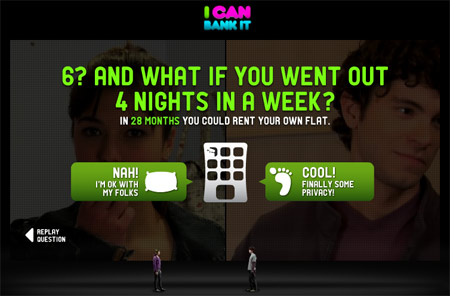
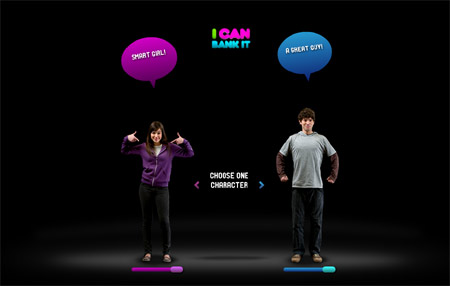
Really nice web iniative by the brazilian bank Banco Itau that taps perfectly into the grounded consumer market. You choose a character to begin with and a series of questions follow: How many minutes do you spend on your mobile every day? Do you know that reducing the costs of your calls could help you saving enough money to buy a laptop?
Long term gratifications and interesting alternatives to teach young people how to save money.

I Can Bank It created by Gringo. via adverblog

Also if you want to know more about the grounded consumer and the impact of the current economic climate on the American Dream check this really interesting report by Context

Friday, August 22

ESOMAR 2008/ Montreal 22-25 September

If you have a moment listen to this really interesting preCast, looking at cultural and sociological methods and how they impact brand strategy and innovation.
via ESOMAR


"I think all the research industry should adopt a CFO, because what the CFO wants to know is not whether this ad tested better than that ad, but does the whole program move us ahead in making brands more valuable in peoples' lives and therefore impacting the bottom line." (Alan C. Middleton).

In this preCast, ahead of this year's Congress in Montreal, BrainJuicer Chief Juicer John Kearon chats with three of the Congress keynotes about how cultural and technological changes are impacting peoples' lives, and how the disciplines of marketing, branding and research need to adapt.

Joining John is former senior JWT executive Alan Middleton, popular anthropologist Grant McCracken, and design entrepreneur Richard Eisermann.

LISTEN TO THE PODCAST HERE


STARRING...

Alan C. Middleton
Assistant Prof. of Marketing and Executive Director,
Executive Education Centre, Schulich School of Business,
York University
(http://www.schulich.yorku.ca)
Grant McCracken
Anthropologist, Research Affiliate, MIT
(http://www.cultureby.com)
Richard Eisermann
Co-founder, Prospect
(http://www.prospectdesign.eu)
Host: John Kearon
Chief Juicer, BrainJuicer
(http://www.brainjuicer.com)