Showing posts with label Classics. Show all posts
Showing posts with label Classics. Show all posts


Tuesday, June 16
BauBike by Michael Ubbesen Jakobsen
.jpg)

Michael Ubbesen Jakobsen is the mind behind the Bauhaus inspired fixed gear BauBike. Jakobsen manufactured the frame using geometric perspectives, applying 60 and 90 degree patterns throughout the bike, giving it a boxy appearance. Gathering only raw materials for the frame, Jakobsen exhibits his excellent craftsmanship and meticulous form is evident at a first glimpse. For more photos and details about the bicycle, check out the BauBike website.
Tuesday, June 2


Saturday, April 11
Evolution of Office Spaces Reflects Changing Attitudes Toward Work
 By Cliff Kuang
Since the dawn of the white-collar age, office designs have cycled through competing demands: openness versus privacy, interaction versus autonomy. Here's a brief history of how seating arrangements have reflected our changing attitudes toward work.
Illustration: Harry Campbell
1Taylorism (ca. 1904)
American engineer Frederick Taylor was obsessed with efficiency and oversight and is credited as one of the first people to actually design an office space. Taylor crowded workers together in a completely open environment while bosses looked on from private offices, much like on a factory floor.
2 Bürolandschaft (ca. 1960)
The German "office landscape" brought the socialist values of 1950s Europe to the workplace: Management was no longer cosseted in executive suites. Local arrangements might vary by function—side-by-side workstations for clerks or pinwheel arrangements for designers, to make chatting easier—but the layout stayed undivided.
3 Action Office (1968)
Bürolandschaft inspired Herman Miller to create a product based on the new European workplace philosophy. Action was the first modular business furniture system, with low dividers and flexible work surfaces. It's still in production today and widely used. In fact, you probably know Action by its generic, more sinister name: cubicle.
4 Cube Farm (ca. 1980)
It's the cubicle concept taken to the extreme. As the ranks of middle managers swelled, a new class of employee was created: too important for a mere desk but too junior for a window seat. Facilities managers accommodated them in the cheapest way possible, with modular walls. The sea of cubicles was born.
Virtual Office (ca. 1994)
Ad agency TBWA\Chiat\Day's LA headquarters was a Frank Gehry masterpiece. But the interior, dreamed up by the company's CEO, was a fiasco. The virtual office had no personal desks; you grabbed a laptop in the morning and scrambled to claim a seat. Productivity nose-dived, and the firm quickly became a laughingstock.
5 Networking (present)
During the past decade, furniture designers have tried to part the sea of cubicles and encourage sociability—without going nuts. Knoll, for example, created systems with movable, semi-enclosed pods and connected desks whose shape separates work areas in lieu of dividers. Most recently, Vitra unveiled furniture in which privacy is suggested if not realized. Its large tables have low dividers that cordon off personal space but won't guard personal calls.
via Wired
Wednesday, February 25
New Diesel store in NYC
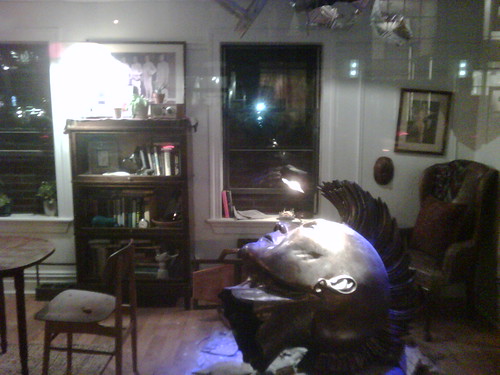
New Diesel store in NYC, originally uploaded by KenjiSummers.
via The Future is Bright
BAMAKO - 7th African Photography Meeting at Centre de Cultura Contemporania de Barcelona
 Maazouz Azamourm, Camel Boy. |
| BARCELONA.- The Centre de Cultura Contemporània de Barcelona presents the exhibition Bamako – 7th African Photography Meeting, curated by Pep Subirós, from 24 February to 1 June 2009. As in previous years, Bamako has two main objectives. The first is to present an overview of contemporary African photography, a particularly outstanding art on the creative scene of that continent, which, despite its geographical proximity, is only now beginning to receive the attention its cultural and artistic vitality deserves. The second is to showcase the importance of the Rencontres Africaines de la Photographie, a biennial event which, after seven outings, is now consolidated as one of Africa’s biggest artistic meeting points. With these objectives as its base, and thanks to an agreement with the organizing bodies of the Rencontres in Bamako, the show at the CCCB presents the pick of the 2007 event: some 200 photographies and a selection of original videos, and printed and film documentation. With the title “In the City and Beyond”, most of the seventh Rencontres Africaines de la Photographie de Bamako centres on the theme of the urban phenomenon. The urban phenomenon rather than the city because, over and beyond the usual reductive views that see cities as material, functional structures and devices, they are, in reality, fundamentally networks of relations between individuals and social groups. In addition to its specific theme, represented in particular by a selection of some 150 photographs from the “International Exhibition”, this latest review of the Rencontres at the CCCB includes the “Tribute” to a foremost African photographer, the late Serge Jongué (Guyana, 1951-2006); a “Monograph” given over entirely to Samuel Fosso, one of the great contemporary creators who are taking photography to the forefront of the visual arts; and, finally, a selection of the original videos submitted in the section “New Images”. via Artdaily |
Saturday, September 13


Saturday, August 30
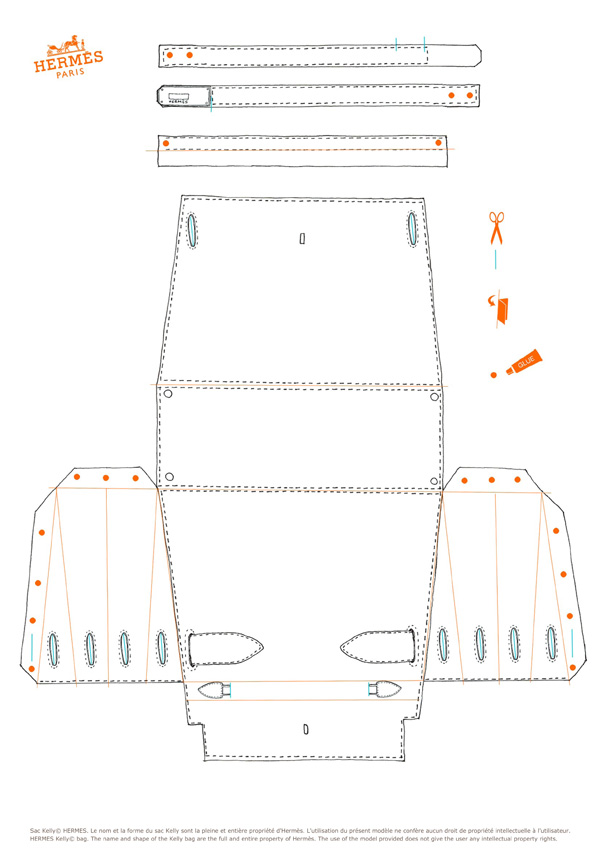
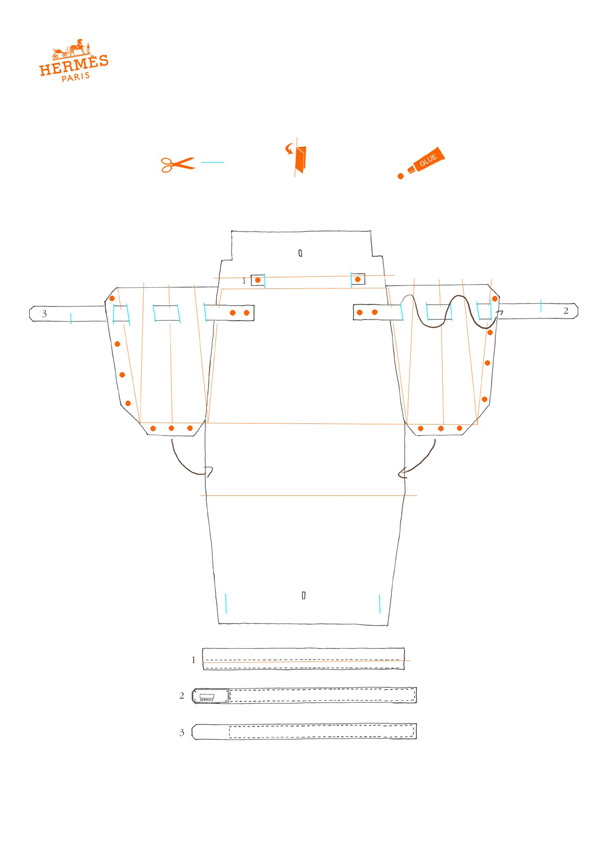
Free Hermes Kelly Bag
I have been working on Free economy for the past couple of weeks, and keep on seeing free everywhere. Here is a free classic.
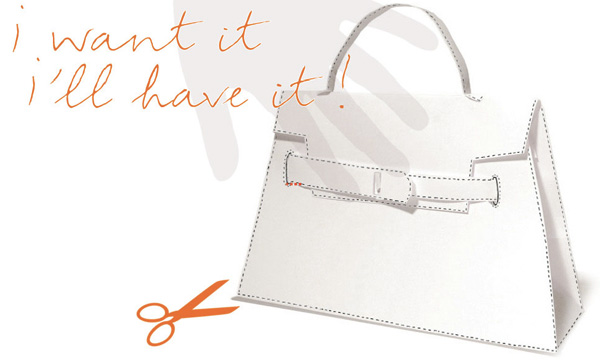
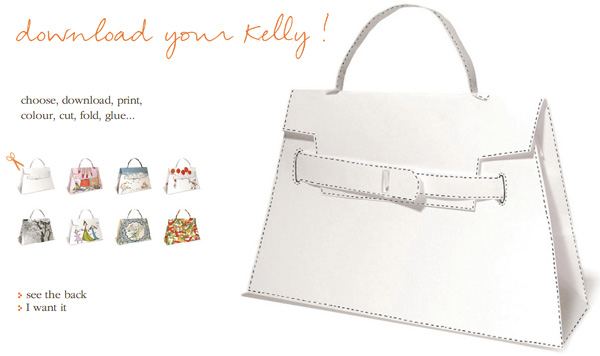
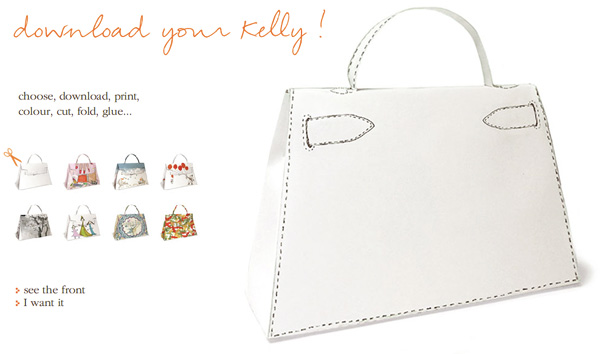
You can download the Kelly on the Hermes site: Hermes Branded pdf’s of DIY cut+glue models of Kelly bags… i just had to laugh. Then press print. Then post.
You can download the Kelly on the Hermes site: Hermes Branded pdf’s of DIY cut+glue models of Kelly bags… i just had to laugh. Then press print. Then post.
Tuesday, August 19
Disassembled Household Appliances
I spotted this on Swiss Miss website last week and forgot to post it. Saw it again on continuous lean this week so here it is
While a student at the Hartford Art School, Brittny Badger wanted to show everyday household appliances from an otherwise unseen perspective. She set to work meticulously disassembled each piece and “arranged their interior parts very systematically on a white sheet of Bristol board” to expose the appliance’s “brains.” The arrangements and subsequent photographs give a completely unique look at something regularly ignored. The resulting images are stunning, futuristic and would be the perfect kitchen decor.
Dust Buster

Waffle Maker

Blender

Iron

Juicer

The complete set of images can be seen here.
via continuous lean
Monday, August 18
Blabber Architectural Classics: Habitat 67


Some see Habitat 67 like and Ant hill or rabbit warren and others see a resemblance to a Taos indian pueblo village. While the visiting public was impressed, they didn’t embrace the concept. At a distance the complex looked like an exciting piece of Cubist sculpture, at close up it’s flat concrete-gray exterior looked dull and as if nobody lived there.
An experiment in apartment living, Habitat 67, became the permanent symbol of Expo 67 after it closed. It was Canadian architect Moshe Safdie’s experiment to make a fundamentally better and cheaper housing for the masses. He attempted to make a revolution in the way homes were built - by the industrialization of the building process; essentially factory mass production. He felt that it was more efficient to make buildings in factories and deliver them prefabricated to the site. Prescient.
Habitat 67, by Moshe Safdie, for Expo 67.
via TED, Daily Icon
Thursday, June 5
Lanvin et ses petites voitures

Alber Elbaz himself is designing those wonderful windows and they are changing every months. Originality is probaby easier because of the number of shops, however as a shopper, it is what I want to see
Many thanks Alber

Every accessory has been enhanced by bright toy-like colours.


via Café Mode
Tuesday, June 3
She May Not Love It, But Rawsthorn Talks 'Design-Art' Events

"Design-art" has been the it word (or words) so far this year (years even?), as you might remember us pointing out a handful of times. But, as a rule, we don't make any concrete decisions about anything until we've read Alice Rawsthorn's opinions on them. Turns out, we're pretty fortunate, as she's just written a new column for the International Herald Tribune about "design-art." While she doesn't love it so much, and lays out a few choice critiques on why "art" should be "art" and "design" be "design," she eventually has to concede that, while she might not go along with all that's happening right now, it's doing big, big business within the art industry, so it's foolish not to at least take a look at it. So Rawsthorn goes on a world tour, talking about all the various "design-art" events, starting, of course, with the biggest of the big, Design Miami/Basel, and finding what's what in this year's scene:
The highlights of this week's Design Miami/ Basel will be the new work commissioned by galleries like Moss and Contrasts in Shanghai. Moss is showing objects by the Dutch duo Studio Job, and Contrasts new pieces by fellow Dutch designers Maarten Baas and Studio Makkink & Bey, and China's Shao Fan. The rest of the fair will be dominated by the modern and contemporary furniture sold by the secondary dealers (so-called because they didn't commission it) who aren't allowed to participate in prestigious art fairs, such as Art Basel and Frieze in London. Their presence is one reason why Galerie Kreo in Paris, one of Europe's most important primary design dealers, has pulled out of Design Miami/ Basel and other international design fairs.
via Media Bistro
Monday, May 5
Ettore Sottsass at Friedman Benda Gallery
New York-based Friedman Benda Gallery, that has in the past exhibited the works of Ron Arad and Joris Laarman and is a big presence at the Design Miami event every year, presents Archetypes, the second in a series of exhibitions devoted to the limited edition and rare works of legendary Italian designer Ettore Sottsass who died last year at the age of 90. Archetypes that will run until June 21, features glass, marble and furniture made between 1965-95.


Sottsass, known for his radical 80s Memphis Movement and the iconic Valentinetypewriter he created for Olivetti, gave design a unique dimension that goes beyond the conventional approach towards universal ideas and mundane objects. The architect-designer was fascinated by American pop art and often expressed his disdain at the clinical post-modern rationalism that favoured function over form.


The exhibition will include a number of iconic and metaphorical works including the well-known Nefertiti desk (1968), Superbox cabinet (1968), the rare Flying Carpet armchair (1972) and Le Strutture Tremano side table (1979). Also on view will be a group of bookcases and rarely seen glass sculptures from the early 90s.
If you are heading to ICFF this month, check out this truly rare exhibition that runs until June 21st at Friedman Benda, 515 West 26th Street, NYC. tel: 212 239 8700
via De51gn
Sunday, April 6
Valcucine - La Cucina Alessi

La Cucina Alessi - Starting from the concepts conceived in the kitchens of modern modular functionalism, that are accepted as the fundamentals of the features of the modern kitchen, and also considering the ‘50s and the modular kitchen crisis, in this context the innovative planning experience and the technological precision of Valcucine have been held in great esteem.
Everything has been meticulously studied: the measurements, the materials, the special features, the details and the combinations
Armchairs That Create Style with Wood
The Riviera Armchair, spotted at City Living.

This is the C-Chair from Modernica.

These are the Eva Chairs from Property.

The French Armchair from Bobby Berk Home.

This is the Grasshopper Chair from Modernica.

The Helena Chair by Panache Designs.

The Emily Armchair, designed by Flex Form. Spotted at My Prestigium.

via contemporist
Subscribe to:
Posts (Atom)



